
Research updates from Luvaminos
Subscribe for catalog updates, new research compounds, and quality documentation releases.
For researchers and labs. No spam — unsubscribe anytime.
Research updates from Luvaminos
Subscribe for catalog updates, new research compounds, and quality documentation releases.
For researchers and labs. No spam — unsubscribe anytime.
Cellular
A multi-peptide research blend examined across extracellular matrix dynamics, inflammatory signaling, angiogenesis, and cell migration models.
Reviewed by Dr. James Whitfield, PharmD · Published · Last reviewed · For research use only.
Peptide blend
Molecular formula
C14H24CuN6O4
Molecular weight
~403.9 g/mol
CAS number
89030-95-5
Sequence
Gly-His-Lys + Cu(II)
Molecular formula
C16H30N4O4
Molecular weight
342.43 g/mol
CAS number
67727-97-3
Sequence
Lys-Pro-Val
Molecular formula
C62H98N16O22
Molecular weight
1,419.5 g/mol
CAS number
137525-51-0
Sequence
GEPPPGKPADDAGLV
Molecular formula
C38H68N10O14
Molecular weight
889.02 g/mol
CAS number
885340-08-9
Sequence
Ac-LKKTETQ
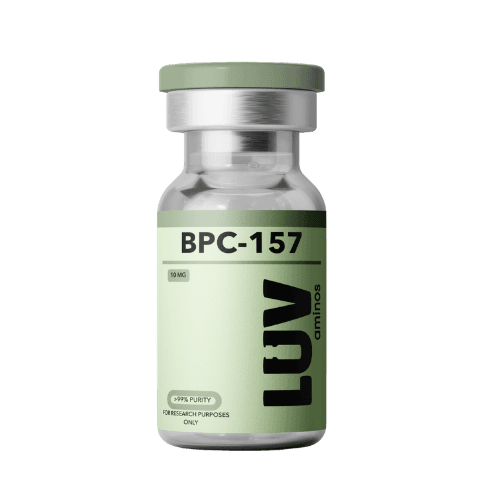
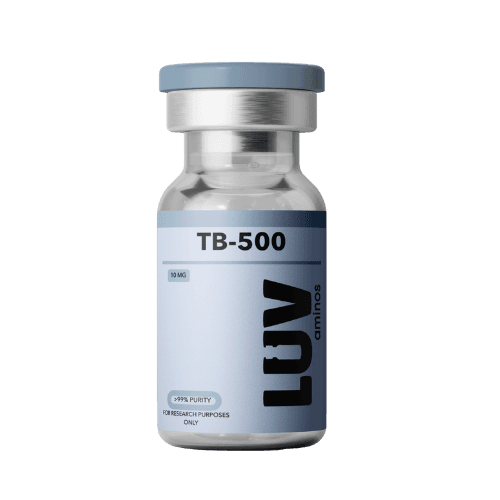
A four-component formulation combining a copper-binding tripeptide (GHK-Cu), an alpha-MSH-derived tripeptide (KPV), a gastric-juice-derived pentadecapeptide (BPC-157), and a synthetic heptapeptide corresponding to the actin-binding domain of Thymosin Beta-4 (TB-500, Ac-LKKTETQ). The components engage distinct molecular targets: GHK-Cu modulates ECM gene expression; KPV acts through NF-κB-associated inflammatory pathways; BPC-157 interacts with the nitric oxide system and VEGFR2; TB-500 sequesters actin to influence cell migration via PI3K/Akt/eNOS signaling. No unified receptor target governs the blend.
Lyophilized
20°C
protect from light; stable months desiccated.
GHK-Cu component is sensitive to alkaline pH; peptides are sensitive to heat, light, and agitation; blend ratios vary by supplier.
Reviews
McGuire F, Hughes E, Maak T, Cushman DM (2026). Preprints.org
Rahman OF, Lee SJ, Seeds WA (2026). JAAOS Global Research & Reviews
McGuire FP, Martinez R, Lenz A, Skinner L, Cushman DM (2025). Current Reviews in Musculoskeletal Medicine
Reviews
Vasireddi N, Hahamyan H, Salata MJ, Miller AO (2025). HSS Journal
Pickart L, Margolina A (2015). Journal of Aging Research & Clinical Practice
Pickart L, Margolina A (2018). International Journal of Molecular Sciences
Pickart L, Margolina A (2008). Journal of Biomaterials Science, Polymer Edition
Primary research
Mateescu DM, Gavrilescu DM, Constantinescu FE, Dima M (2026). Pharmaceutics
Yildirim AK, Dastan AO, Ertus MD, Arslan M (2026). Journal of Clinical Medicine
Park JH, Lee SY, Kim HS, Kim YS (2026). ACS Nano
Kim HJ, Kim SH, Kim HG, Lee JH (2025). Tissue and Cell
Chang CH, Tsai LC, Hsu YH, Lee MH (2011). Journal of Applied Physiology
Ryu YK, Im YS, Moon EY (2010). Oncology Reports
Sikiric P, Seiwerth S, Rucman R, Kolenc D, Drmic I (2010). Journal of Physiology and Pharmacology
Qiu FY, Song XX, Zheng H, Zhao YB (2009). Journal of Cardiovascular Pharmacology
Dalmasso G, et al. (2008). Gastroenterology
Sikiric P, et al. (1997). Journal of Physiology (Paris)
Research Use Only
These products are intended for research purposes only and are not for human consumption. Not FDA approved. Not intended to diagnose, treat, cure, or prevent any disease.
| Compound | Type | Molecular weight | CAS number |
|---|---|---|---|
| BPC-157 + TB-500 + GHK-Cu + KPVThis page | Peptide blend | — | — |
| BPC-157 | Synthetic peptide (pentadecapeptide) | 1,419.5 g/mol | 137525-51-0 |
| TB-500 | Synthetic peptide (Thymosin Beta-4 related) | ~4,963 g/mol | 77591-33-4 |
| Epithalon | Synthetic linear tetrapeptide | 390.35 g/mol | 307297-39-8 |
| SS-31 | Synthetic aromatic-cationic tetrapeptide (C-terminally amidated, mitochondria-targeted) | 639.8 g/mol | 736992-21-5 |
Comparison of laboratory reference specifications only. For research use only; not a therapeutic comparison.
Quality & methods