
Research updates from Luvaminos
Subscribe for catalog updates, new research compounds, and quality documentation releases.
For researchers and labs. No spam — unsubscribe anytime.
Research updates from Luvaminos
Subscribe for catalog updates, new research compounds, and quality documentation releases.
For researchers and labs. No spam — unsubscribe anytime.
Cellular
A synthetic aromatic-cationic tetrapeptide studied as a research tool for its selective interaction with cardiolipin on the inner mitochondrial membrane.
Reviewed by Dr. James Whitfield, PharmD · Published · Last reviewed · For research use only.
Type
Synthetic aromatic-cationic tetrapeptide (C-terminally amidated, mitochondria-targeted)
Molecular formula
C32H49N9O5
Molecular weight
639.8 g/mol
CAS number
736992-21-5
Amino acids
4
Sequence
D-Arg-2',6'-dimethyl-Tyr-Lys-Phe-NH2
Modification
N-terminal D-arginine (proteolytic resistance); 2',6'-dimethyltyrosine at position 2; C-terminal amide.
SS-31 is a water-soluble aromatic-cationic tetrapeptide of the Szeto–Schiller series characterized by an alternating motif of cationic (D-Arg, Lys) and aromatic (2',6'-dimethyltyrosine, Phe) side chains that confers a net positive charge while maintaining membrane permeability. In published research it is characterized as concentrating selectively in the inner mitochondrial membrane through electrostatic and hydrophobic interactions, where it associates with the anionic phospholipid cardiolipin. Mechanistic work describes binding at the membrane interfacial region and modulation of membrane surface electrostatics, lipid packing, and the cardiolipin–cytochrome c interaction. Its target class is a membrane phospholipid (cardiolipin) and associated cardiolipin-binding proteins of the oxidative-phosphorylation and 2-oxoglutarate-metabolism machinery — it is not described as a cell-surface receptor ligand.
Lyophilized
2–8 °C routine handling
−20 °C or below long-term; protect from light. Lyophilized material reported stable up to 24 months at recommended conditions.
The N-terminal D-arginine and 2', 6'-dimethyltyrosine modifications confer resistance to enzymatic degradation relative to all-L peptides. Water-soluble; brief room-temperature exposure during transport is generally tolerated.
Reviews
Tung C, Varzideh F, Farroni E, Mone P, Kansakar U, Jankauskas SS, Santulli G (2025). International Journal of Molecular Sciences
Li M, et al. (2025). Int J Mol Sci
Chen Y, et al. (2022). Front Pharmacol
Reviews
Nhu NT, Xiao SY, Liu Y, Kumar VB, Cui ZY, Lee SD (2021). Frontiers in Integrative Neuroscience
Szeto HH (2014). Br J Pharmacol
Szeto HH (2014). Clinical Pharmacology & Therapeutics
Clinical
Thompson WR, et al. (2024). Genet Med
Karaa A, Bertini E, Carelli V, et al.; MMPOWER-3 Trial Investigators (2023). Neurology
Ehlers JP, et al. (2024). Ophthalmology Science
Mettu PS, Allingham MJ, Cousins SW (2021). Ophthalmology Science
Butler J, Khan MS, Anker SD, Fonarow GC, Kim RJ, Nodari S, O'Connor CM, Pieske B, Pieske-Kraigher E, Sabbah HN, Senni M, Voors AA, Udelson JE, Carr J, Gheorghiade M, Filippatos G (2020). Journal of Cardiac Failure
Karaa A, et al. (2020). Journal of Cachexia, Sarcopenia and Muscle
Reid Thompson W, et al. (2021). Genetics in Medicine
Karaa A, Haas R, Goldstein A, Vockley J, Weaver WD, Cohen BH (2018). Neurology
Daubert MA, Yow E, Dunn G, Marchev S, Barnhart H, Douglas PS, O'Connor C, Goldstein S, Udelson JE, Sabbah HN (2017). Circulation: Heart Failure
Hortmann M, et al. (2017). European Heart Journal: Acute Cardiovascular Care
Saad A, et al. (2017). Circ Cardiovasc Interv
Gibson CM, Giugliano RP, Kloner RA, et al. (2016). European Heart Journal
Primary research
Li M, et al. (2024). RSC Adv
Mitchell W, Tamucci JD, Ng EL, Liu S, Birk AV, Szeto HH, May ER, Alexandrescu AT, Alder NN (2022). eLife
Chavez JD, Tang X, Campbell MD, Reyes G, Kramer PA, Stuppard R, Keller A, Marcinek DJ, Bruce JE (2020). Proceedings of the National Academy of Sciences
Mitchell W, Ng EA, Tamucci JD, et al. (2020). Journal of Biological Chemistry
Reddy PH, Manczak M, Kandimalla R (2017). Human Molecular Genetics
Sweetwyne MT, Pippin JW, Eng DG, et al. (2017). Kidney International
Sabbah HN, Gupta RC, Kohli S, Wang M, Hachem S, Zhang K (2016). Circulation: Heart Failure
Birk AV, Chao WM, Bracken C, Warren JD, Szeto HH (2014). British Journal of Pharmacology
Birk AV, Liu S, Soong Y, Mills W, Singh P, Warren JD, Seshan SV, Pardee JD, Szeto HH (2013). Journal of the American Society of Nephrology
Siegel MP, Kruse SE, Percival JM, Goh J, White CC, Hopkins HC, Kavanagh TJ, Szeto HH, Rabinovitch PS, Marcinek DJ (2013). Aging Cell
Dai DF, et al. (2013). Circ Heart Fail
Calkins MJ, Manczak M, Reddy PH (2012). Pharmaceuticals
Szeto HH, Liu S, Soong Y, Wu D, Darrah SF, Cheng FY, Zhao Z, Ganger M, Tow CY, Seshan SV (2011). Journal of the American Society of Nephrology
Zhao K, Zhao GM, Wu D, Soong Y, Birk AV, Schiller PW, Szeto HH (2004). Journal of Biological Chemistry
Research Use Only
These products are intended for research purposes only and are not for human consumption. Not FDA approved. Not intended to diagnose, treat, cure, or prevent any disease.
| Compound | Type | Molecular weight | CAS number |
|---|---|---|---|
| SS-31This page | Synthetic aromatic-cationic tetrapeptide (C-terminally amidated, mitochondria-targeted) | 639.8 g/mol | 736992-21-5 |
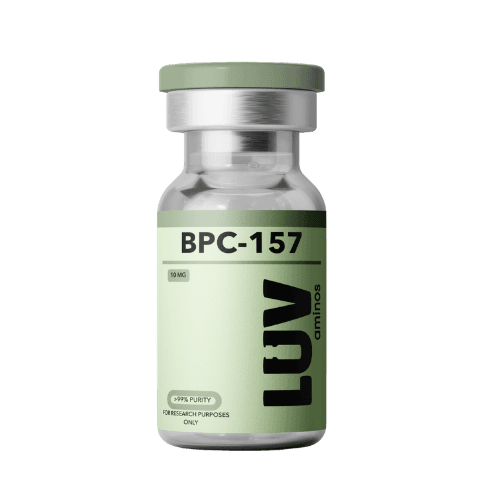
| BPC-157 | Synthetic peptide (pentadecapeptide) | 1,419.5 g/mol | 137525-51-0 |
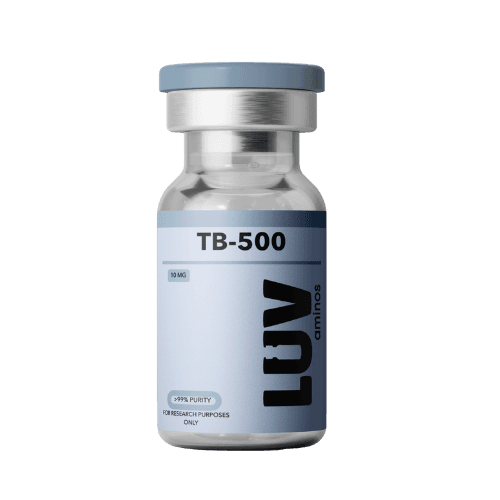
| TB-500 | Synthetic peptide (Thymosin Beta-4 related) | ~4,963 g/mol | 77591-33-4 |
| Epithalon | Synthetic linear tetrapeptide | 390.35 g/mol | 307297-39-8 |
| BPC-157 + TB-500 + GHK-Cu + KPV | Peptide blend | — | — |
Comparison of laboratory reference specifications only. For research use only; not a therapeutic comparison.
Quality & methods