
Research updates from Luvaminos
Subscribe for catalog updates, new research compounds, and quality documentation releases.
For researchers and labs. No spam — unsubscribe anytime.
Research updates from Luvaminos
Subscribe for catalog updates, new research compounds, and quality documentation releases.
For researchers and labs. No spam — unsubscribe anytime.
Cellular
A 28-amino-acid acetylated thymic peptide studied in cell-based receptor-signaling and structural-biology research models.
Reviewed by Dr. James Whitfield, PharmD · Published · Last reviewed · For research use only.
Type
Linear N-terminally acetylated polypeptide (28 residues; thymic peptide)
Molecular formula
C129H215N33O55
Molecular weight
~3,108.3 Da
CAS number
62304-98-7
Amino acids
28
Sequence
Ac-SDAAVDTSSEITTKDLKEKKEVVEEAEN
Modification
N-terminal acetylation at Ser1; highly acidic (pI 4.2); no cysteine residues or disulfide bonds; linear peptide.
An N-terminally acetylated 28-residue thymic peptide derived from prothymosin alpha. Research characterizes it as a pleiotropic signaling peptide engaging a family of cell-surface pattern-recognition receptors studied across several receptor subtypes and cell populations, with reports spanning multiple receptor-subtype engagements. Downstream signal transduction proceeds through the adaptor protein MyD88 and nodes including TRAF6, IRAK4, IKK, NF-κB, p38 MAPK, and IRF3/IRF7, with measured outputs including cell-maturation markers, interleukin-12 production, type I interferon induction, IDO-mediated tryptophan catabolism, NK-cell activity markers, and T-cell differentiation markers. Structurally, the peptide is disordered in aqueous solution and adopts helical conformations in membrane-mimetic environments; biophysical studies have characterized N-terminal insertion into phospholipid vesicles, serum-albumin carriage, and interactions with galectin-1. No single high-affinity receptor has been definitively established across the literature.
Lyophilized
−20 °C (±5 °C)
white to off-white powder; protect from heat, light, and moisture.
Linear peptide; no cysteine residues or disulfide bonds; N-terminal acetylation reported to confer resistance to aminopeptidase degradation. Aliquot to minimize freeze–thaw exposure.
Reviews
Garaci E, Paci M, Matteucci C, Costantini C, Puccetti P, Romani L. (2024). Frontiers in Medicine
Tao N, Xu X, Ying Y, Hu S, Sun Q, Lv G, Gao J. (2023). Molecules
Soeroto AY, Suryadinata H, Yanto TA, Hariyanto TI. (2023). Inflammopharmacology
Reviews
Dominari A, Hathaway D, Pandav K, et al. (2020). World Journal of Virology
Costantini C, Bellet MM, Pariano M, Renga G, Stincardini C, Goldstein AL, Garaci E, Romani L. (2019). Frontiers in Oncology
Li C, et al. (2016). BMC Infectious Diseases
Camerini R, Garaci E. (2015). Expert Opinion on Biological Therapy
Zhang YY, Chen EQ, Yang J, Duan YR, Tang H. (2009). Virology Journal
Clinical
Wang Z, Chen J, Zhu C, et al. (2021). Frontiers in Immunology
Liu Y, Pang Y, Hu Z, et al. (2020). Clinical Infectious Diseases
Wu J, Zhou L, Liu J, et al. (2013). Critical Care
Ciancio A, Andreone P, Kaiser S, et al. (2012). Journal of Viral Hepatitis
Maio M, Mackiewicz A, Testori A, et al. (2010). Journal of Clinical Oncology
Poo JL, Sánchez-Ávila F, Kershenobich D, et al. (2004). Journal of Gastroenterology and Hepatology
Chien RN, Liaw YF, et al. (1998). Hepatology
Gravenstein S, Duthie EH, Miller BA, et al. (1989). Journal of the American Geriatrics Society
Primary research
Matteucci C, Nepravishta R, Argaw-Denboba A, et al. (2023). International Immunopharmacology
Romani L, Oikonomou V, Moretti S, et al. (2017). Nature Medicine
Nepravishta R, Mandaliti W, Eliseo T, et al. (2015). Expert Opinion on Biological Therapy
Elizondo-Riojas MA, Chamow SM, Tuthill CW, Gorenstein DG, Volk DE. (2011). Biochemical and Biophysical Research Communications
Bozza S, Gaziano R, Bonifazi P, et al. (2007). International Immunology
Romani L, Bistoni F, Montagnoli C, et al. (2006). Blood
Zhang P, Chan J, Dragoi AM, et al. (2005). EMBO Reports
Romani L, Bistoni F, Gaziano R, et al. (2004). Blood
Grottesi A, Sette M, Palamara T, et al. (1998). Peptides
Goldstein AL, et al. (1977). Proc Natl Acad Sci USA
Also known as: Ta1
Research Use Only
These products are intended for research purposes only and are not for human consumption. Not FDA approved. Not intended to diagnose, treat, cure, or prevent any disease.
| Compound | Type | Molecular weight | CAS number |
|---|---|---|---|
| Thymosin Alpha-1This page | Linear N-terminally acetylated polypeptide (28 residues; thymic peptide) | ~3,108.3 Da | 62304-98-7 |
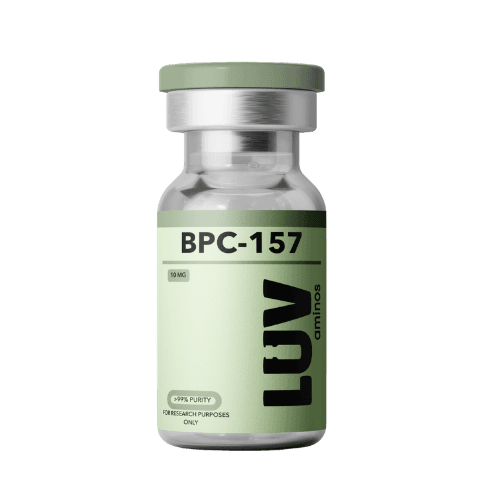
| BPC-157 | Synthetic peptide (pentadecapeptide) | 1,419.5 g/mol | 137525-51-0 |
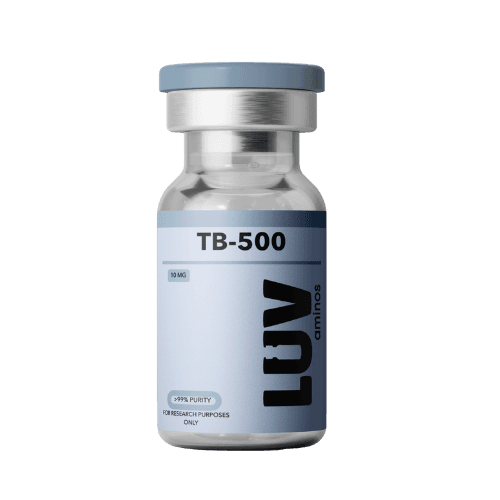
| TB-500 | Synthetic peptide (Thymosin Beta-4 related) | ~4,963 g/mol | 77591-33-4 |
| Epithalon | Synthetic linear tetrapeptide | 390.35 g/mol | 307297-39-8 |
| SS-31 | Synthetic aromatic-cationic tetrapeptide (C-terminally amidated, mitochondria-targeted) | 639.8 g/mol | 736992-21-5 |
Comparison of laboratory reference specifications only. For research use only; not a therapeutic comparison.
Quality & methods