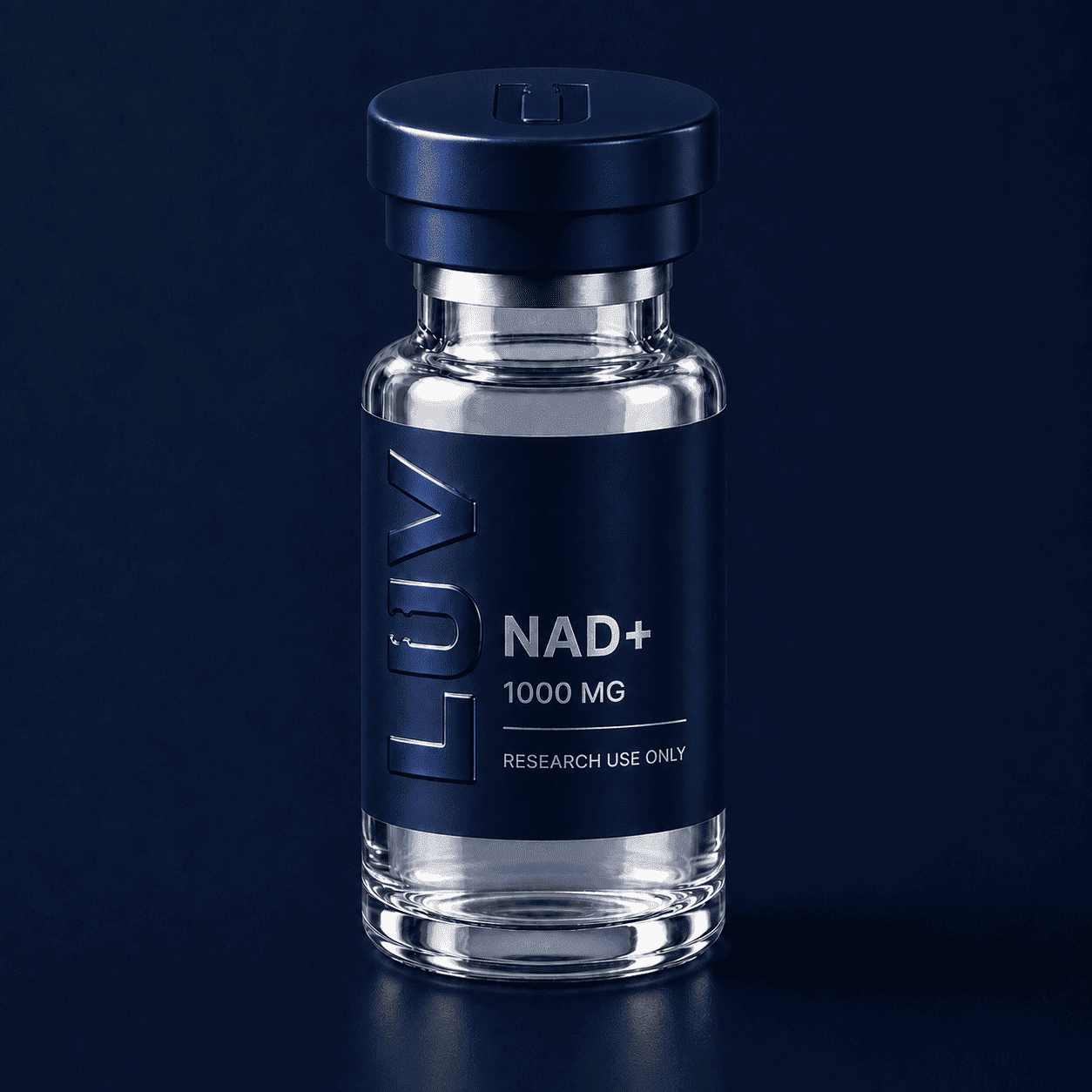
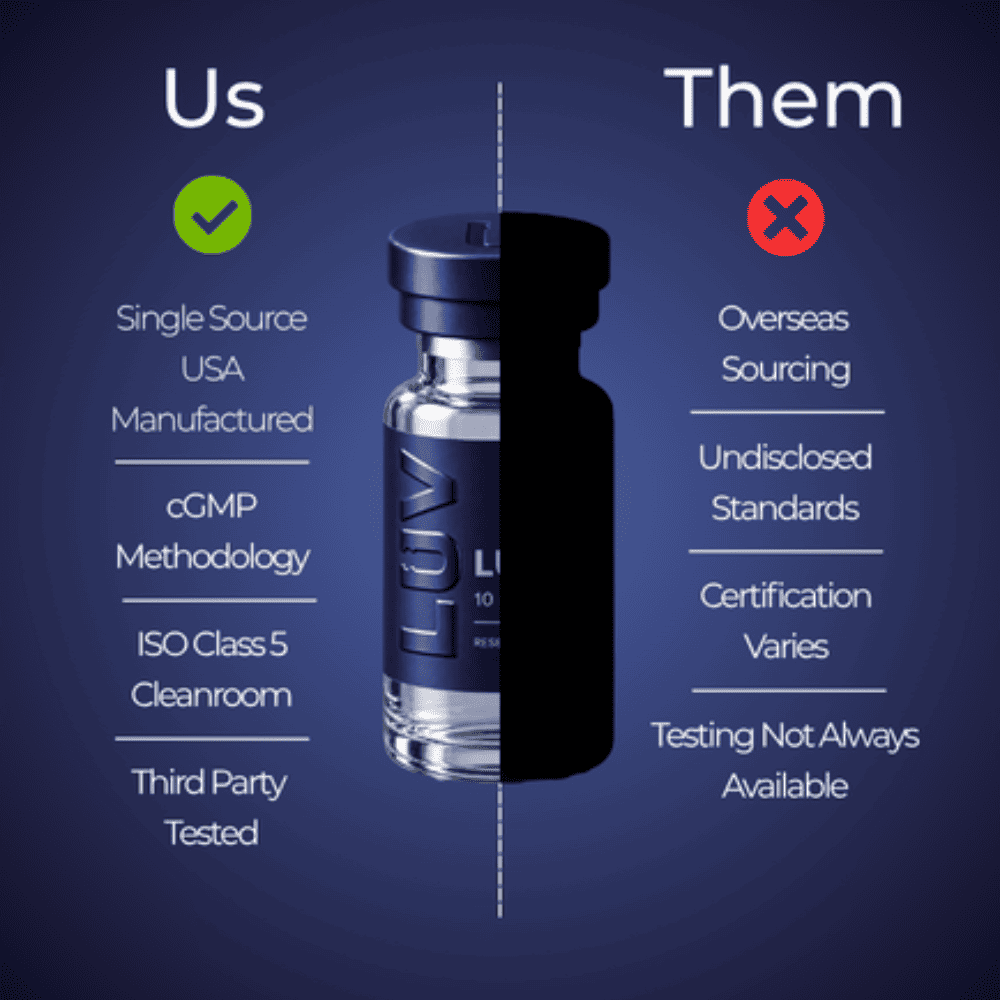
NAD+
$110
Note: This product is provided as a lyophilized, research-grade powder and does not come in liquid form.
Select size:
Quantity
Add one more and get 5% off

Secure checkout
- 30-day money back — full refund from delivery, nothing to return
- Two-day shipping — orders before 6:00 PM ET ship the same day, seven days a week
- Lot-specific certificates — every lot tested, every result published
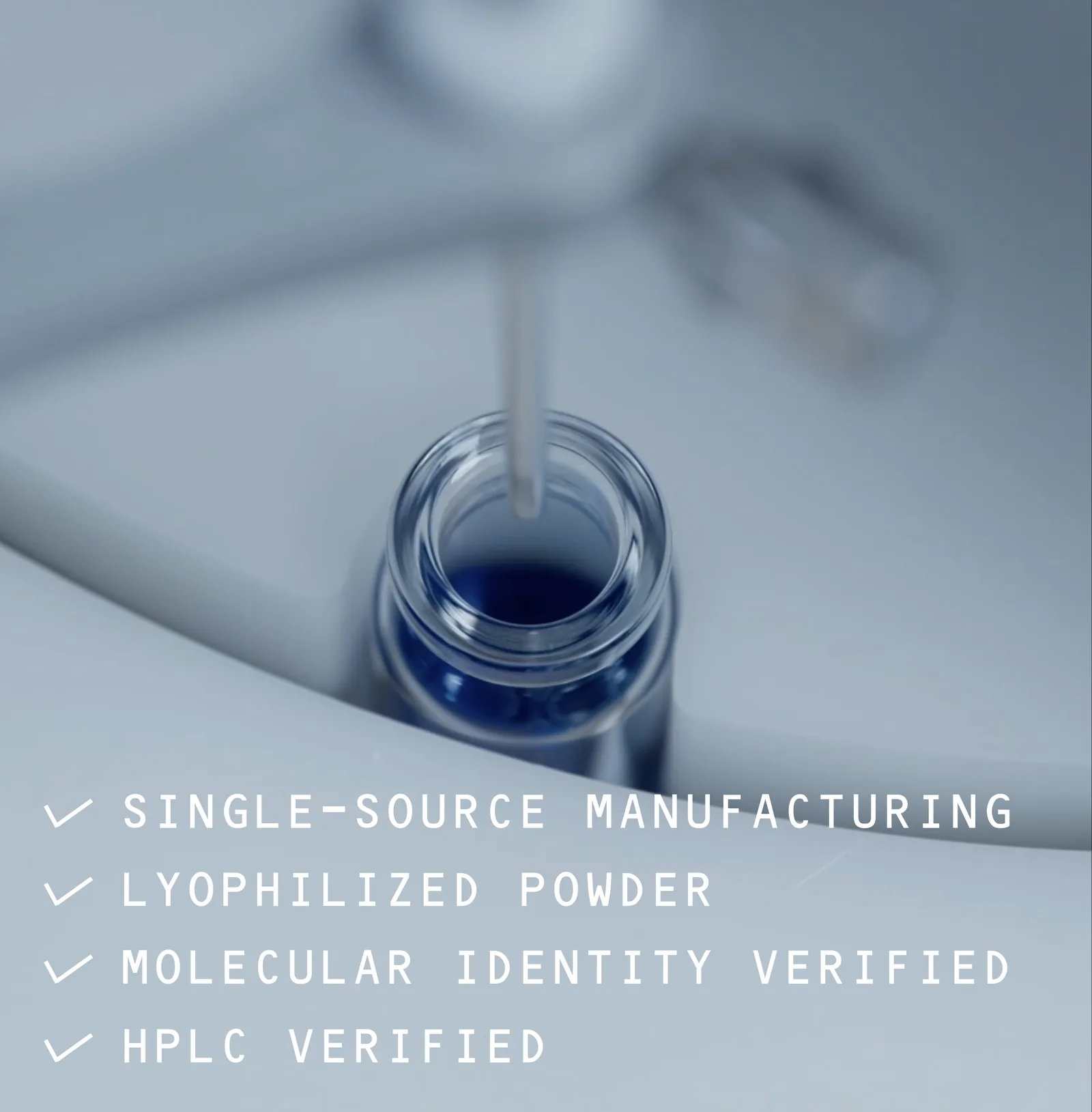
- Single-source manufacturing
- Free shipping over $200 — $10 flat below that
Certificate of Analysis (COA)
Lot NAD-1000-001 · 99.95% ·
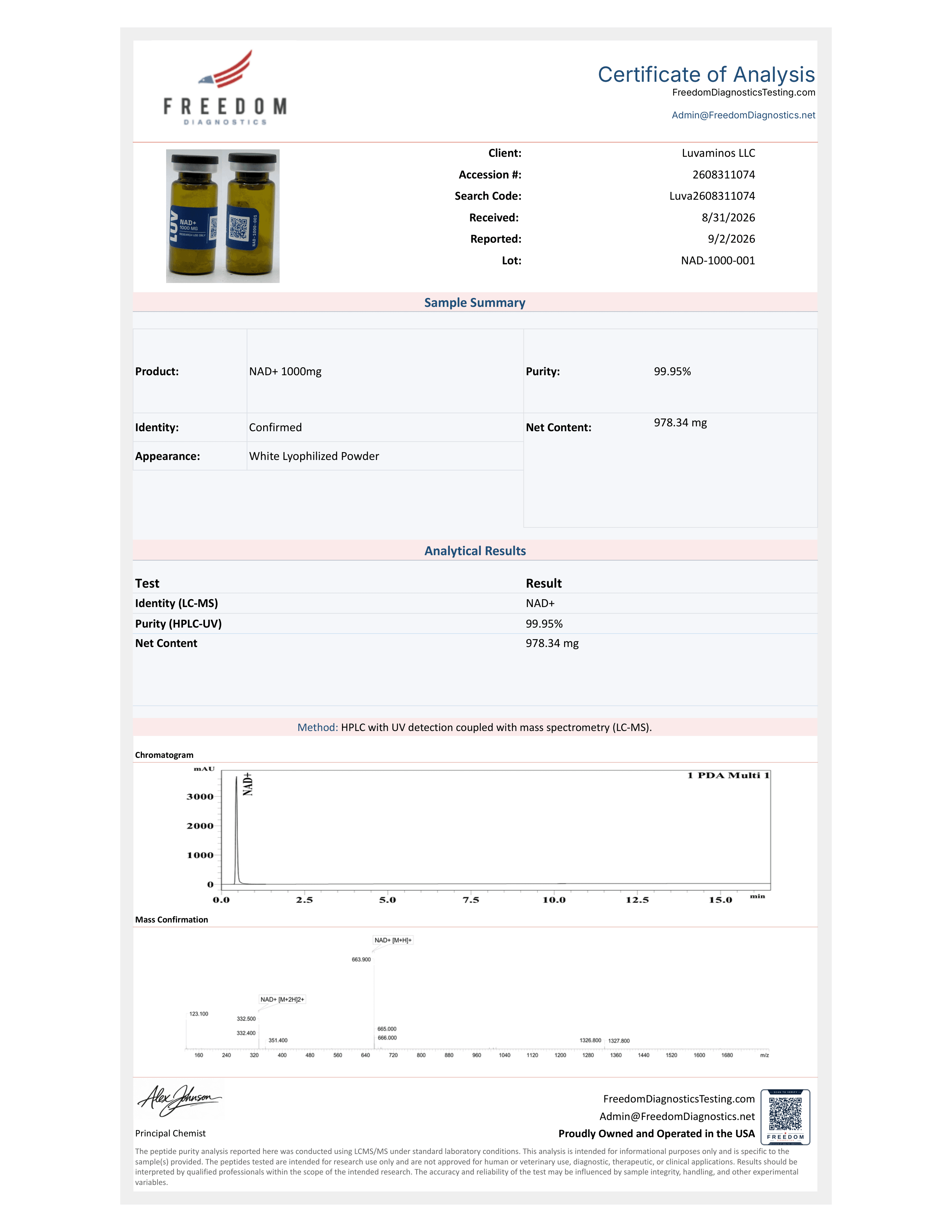
Lot NAD-1000-001 · 99.95% ·
Every lot is tested by Freedom Diagnostics Testing, PLLC of Franklin, Tennessee, an independent, US-based, a CLIA-licensed laboratory, CLIA number 14D2263999. We test for identity, purity and net peptide content on every lot, and results are published on the laboratory’s own portal.
Also in stock

A New Standard for Peptide Manufacturing
Verify peptide authenticity with QR technology
Our peptide vials come with unique QR codes that allow for quick, easy verification of authenticity.
Shop Products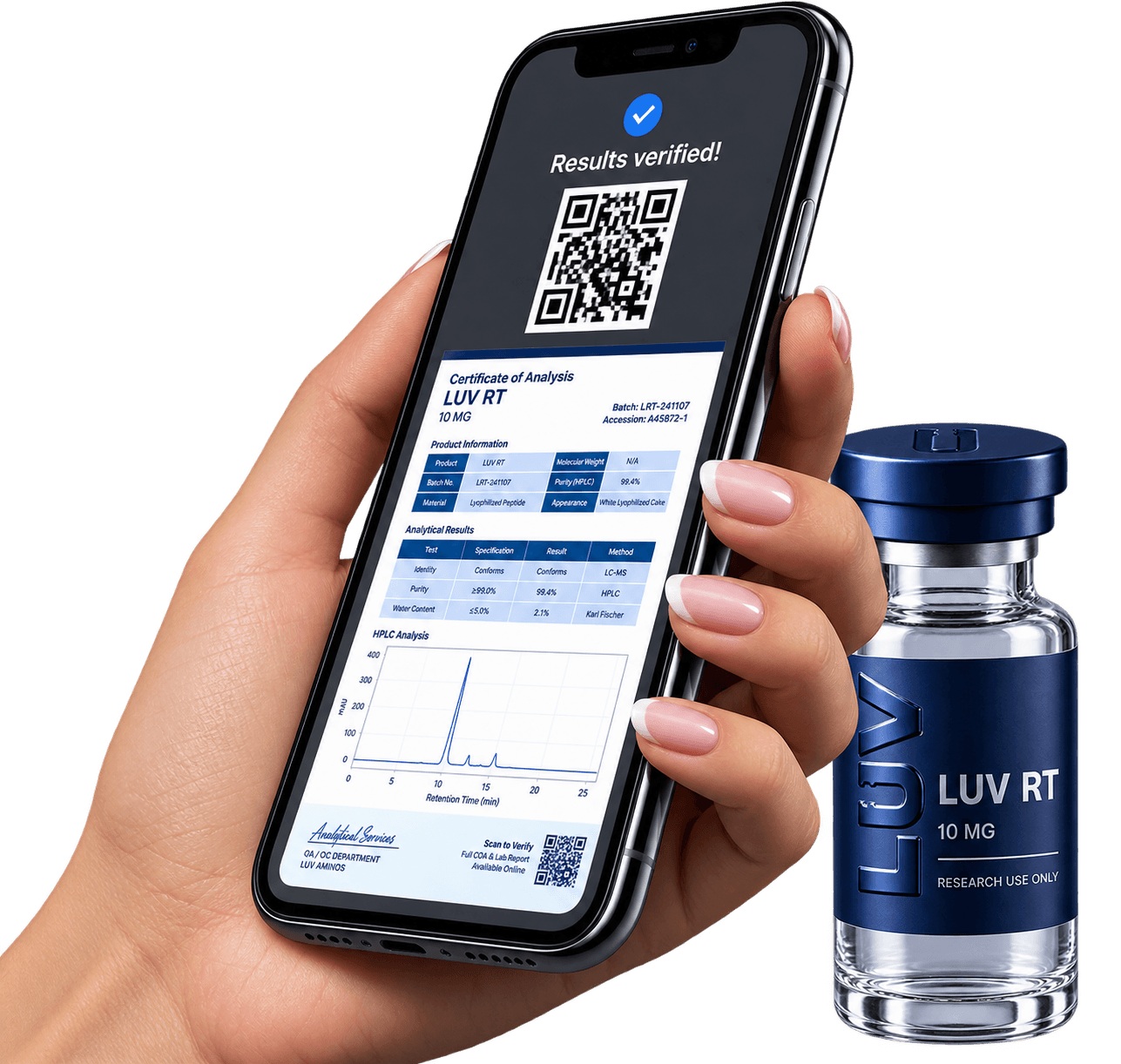
What is QR verification?
- Lot-matched: the code on the vial maps to that exact lot.
- Independently tested: every lot goes to Freedom Diagnostics, Franklin, Tennessee.
- Purity and identity: HPLC for purity, mass spectrometry for identity.
- Batch-specific COAs: every lot tested, every result published.
- Check it yourself: each certificate carries an accession number you can look up on the laboratory’s own portal.
Frequently asked questions
What purity do you hold every lot to?
99% by HPLC. Every lot is measured against that standard and the measured result is published on that lot’s certificate.
Can I check the test results myself, without taking your word for it?
Yes, and that is the point of how this is set up. Every lot is tested by Freedom Diagnostics Testing, PLLC of Franklin, Tennessee, an independent laboratory we do not own, CLIA number 14D2263999. Every certificate names that laboratory and carries an accession number issued by them, and their verification portal is public. You can look the result up on the laboratory’s own system rather than on ours. See the certificate library.
When will my order ship?
Same day, if you order before 6:00 PM ET. We pack and hand to the carrier seven days a week, including weekends, so a Saturday order does not sit until Monday. After the cutoff it goes out the next day. Shipping is two-day, $10 flat and free over $200, and your tracking number is emailed the moment the label is created.
What happens if something is wrong with my order?
You have 30 days from delivery to get your money back. Nothing has to be sent back. Email support@luvaminos.com with your order number. Read the full policy.
How can I pay?
Visa, Mastercard, American Express, Discover, Apple Pay, Google Pay and Zelle.