
Research updates from Luvaminos
Subscribe for catalog updates, new research compounds, and quality documentation releases.
For researchers and labs. No spam — unsubscribe anytime.
Research updates from Luvaminos
Subscribe for catalog updates, new research compounds, and quality documentation releases.
For researchers and labs. No spam — unsubscribe anytime.
Cellular
A foundational pyridine-dinucleotide coenzyme studied as a redox cofactor and enzymatic cosubstrate across bioenergetics, DNA-repair signaling, and protein-deacylation research.
Reviewed by Dr. James Whitfield, PharmD · Published · Last reviewed · For research use only.
Type
Pyridine-dinucleotide coenzyme
Molecular formula
C21H27N7O14P2
Molecular weight
663.43 g/mol
CAS number
53-84-9
NAD+ operates through two broad biochemical modes. As a redox cofactor, it accepts a hydride at the C4 position of its nicotinamide ring to form NADH — a reversible reaction exploited by hundreds of oxidoreductases and dehydrogenases that bind it through a conserved βαβ Rossmann-fold dinucleotide-binding motif. As a consumable cosubstrate, NAD+ is cleaved at the glycosidic bond between nicotinamide and the ADP-ribose moiety by three signaling-enzyme families: poly(ADP-ribose) polymerases (PARPs/ARTDs), which transfer ADP-ribose units onto acceptor proteins in DNA-damage responses; sirtuins (SIRT1–7), NAD+-dependent protein deacylases that couple acyl-lysine mark removal to production of nicotinamide and 2′-O-acyl-ADP-ribose; and NAD+ glycohydrolases/ADP-ribosyl cyclases (CD38, CD157/BST1, and the TIR-domain NADase SARM1). Cellular NAD+ pools are compartmentalized across the cytosol, nucleus, and mitochondria, with SLC25A51 identified as a mammalian mitochondrial NAD+ transporter.
Lyophilized
20°C long term
store desiccated, sealed from air, and protected from light. NAD+ is hygroscopic.
Hygroscopic in solid state; aqueous NAD+ is labile and degrades with heat, alkaline pH, and repeated freeze-thaw. Aliquot working solutions to limit hydrolysis.
Reviews
Navas LE, Carnero A (2022). Cells
Covarrubias AJ, Perrone R, Grozio A, Verdin E (2021). Nature Reviews Molecular Cell Biology
Katsyuba E, Romani M, Hofer D, Auwerx J (2020). Nature Metabolism
Reviews
Alemasova EE, Lavrik OI (2019). Nucleic Acids Research
Chini CCS, et al. (2018). Trends in Pharmacological Sciences
Cantó C, Menzies KJ, Auwerx J (2015). Cell Metabolism
Houtkooper RH, Cantó C, Wanders RJ, Auwerx J (2010). Endocrine Reviews
Clinical
Wang DD, et al. (2025). eClinicalMedicine
et al. (2023). PubMed
Yoshino M, Yoshino J, et al. (2021). Science
Martens CR, Denman BA, Mazzo MR, et al. (2018). Nature Communications
Elhassan YS, et al. (2017). J Endocr Soc
Trammell SAJ, Schmidt MS, Weidemann BJ, et al. (2016). Nature Communications
Primary research
Luongo TS, Eller JM, Lu MJ, et al. (2020). Nature
Girardi E, Agrimi G, Goldmann U, et al. (2020). Nature Communications
Jiang Y, Liu T, Lee CH, Chang Q, Yang J, Zhang Z (2020). Nature
Katsyuba E, Mottis A, Zietak M, et al. (2018). Nature
Essuman K, Summers DW, Sasaki Y, et al. (2017). Neuron
Camacho-Pereira J, Tarragó MG, Chini CCS, et al. (2016). Cell Metabolism
Mills KF, Yoshida S, Stein LR, et al. (2016). Cell Metabolism
Bieganowski P, Brenner C (2004). Cell
Imai S, Armstrong CM, Kaeberlein M, Guarente L (2000). Nature
Also known as: Nicotinamide adenine dinucleotide, Nadide
Research Use Only
These products are intended for research purposes only and are not for human consumption. Not FDA approved. Not intended to diagnose, treat, cure, or prevent any disease.
| Compound | Type | Molecular weight | CAS number |
|---|---|---|---|
| NAD+This page | Pyridine-dinucleotide coenzyme | 663.43 g/mol | 53-84-9 |
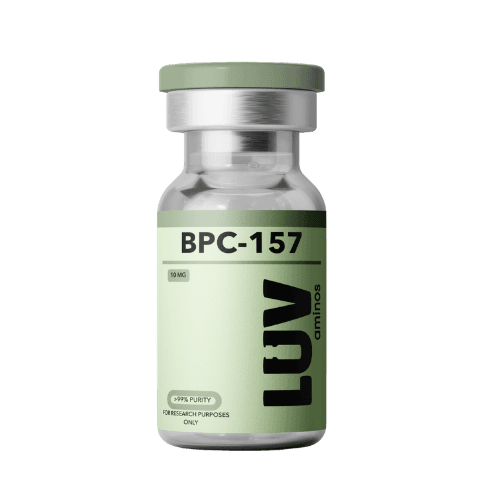
| BPC-157 | Synthetic peptide (pentadecapeptide) | 1,419.5 g/mol | 137525-51-0 |
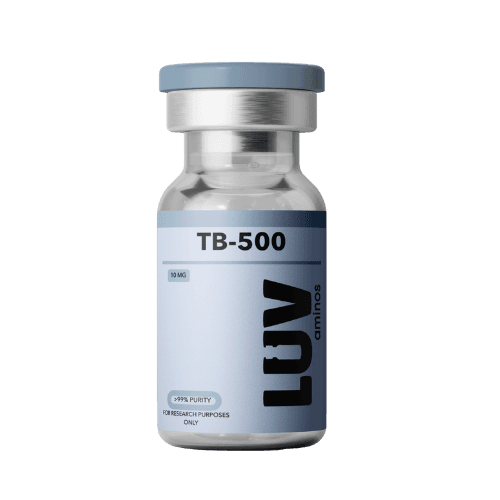
| TB-500 | Synthetic peptide (Thymosin Beta-4 related) | ~4,963 g/mol | 77591-33-4 |
| Epithalon | Synthetic linear tetrapeptide | 390.35 g/mol | 307297-39-8 |
| SS-31 | Synthetic aromatic-cationic tetrapeptide (C-terminally amidated, mitochondria-targeted) | 639.8 g/mol | 736992-21-5 |
Comparison of laboratory reference specifications only. For research use only; not a therapeutic comparison.
Quality & methods