LuvAminos
ProductsResearchAffiliate ProgramContact us
Luvaminos

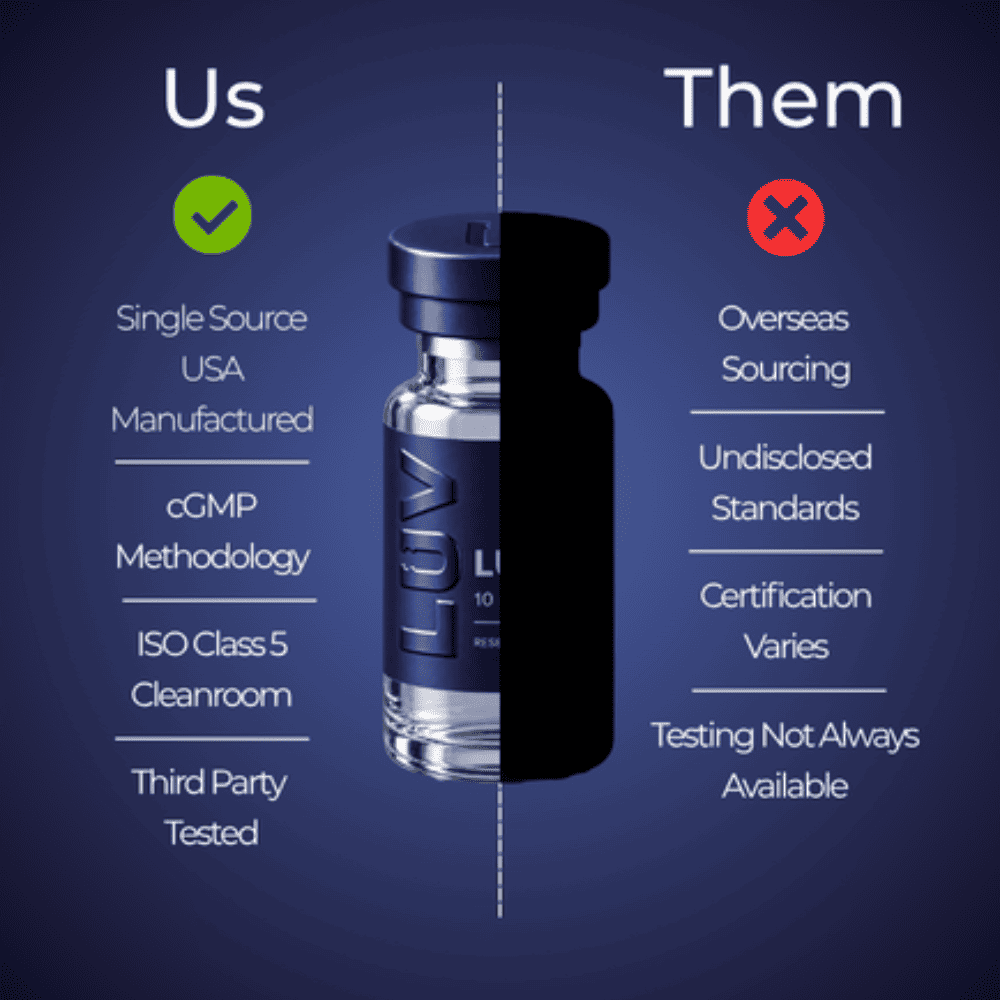
Research-grade peptides for laboratory and in-vitro research. Third-party tested, documented per batch.

(505) 460-8488

[email protected]

Shop

  • All Products

Resources

  • Research Library
  • Certificates of Analysis
  • Affiliate Program
  • Loyalty Program
  • Refer a Friend

Support

  • Contact Us
  • FAQ
  • Shipping Info
  • Returns & Refunds

Legal

  • Privacy Policy
  • Your Privacy Choices
  • Terms of Service
  • Affiliate Terms
  • Disclaimer
  • Research Use Only

!FDA Disclaimer — Research Use Only

Statements regarding these products have not been evaluated by the U.S. Food and Drug Administration. These products are intended for laboratory and in-vitro research use only and are not for human or veterinary consumption of any kind. They are not drugs, foods, or supplements, are not FDA approved, and are not intended to diagnose, treat, cure, or prevent any disease. All products are sold exclusively to qualified researchers and must be handled by trained professionals. Read the full disclaimer →

© 2026 Luvaminos LLC. All products for research purposes only. Not for human consumption. Not FDA approved.

1209 Mountain Road PL NE STE R, Albuquerque, NM 87110

  • VisaVISA
  • Mastercard
  • American ExpressAMEX
  • DiscoverDiscover
  • Ethereum
  • SSL Secured
  • 99%+ Purity
  • Shipment Protection
Home/Store/GHK-Cu
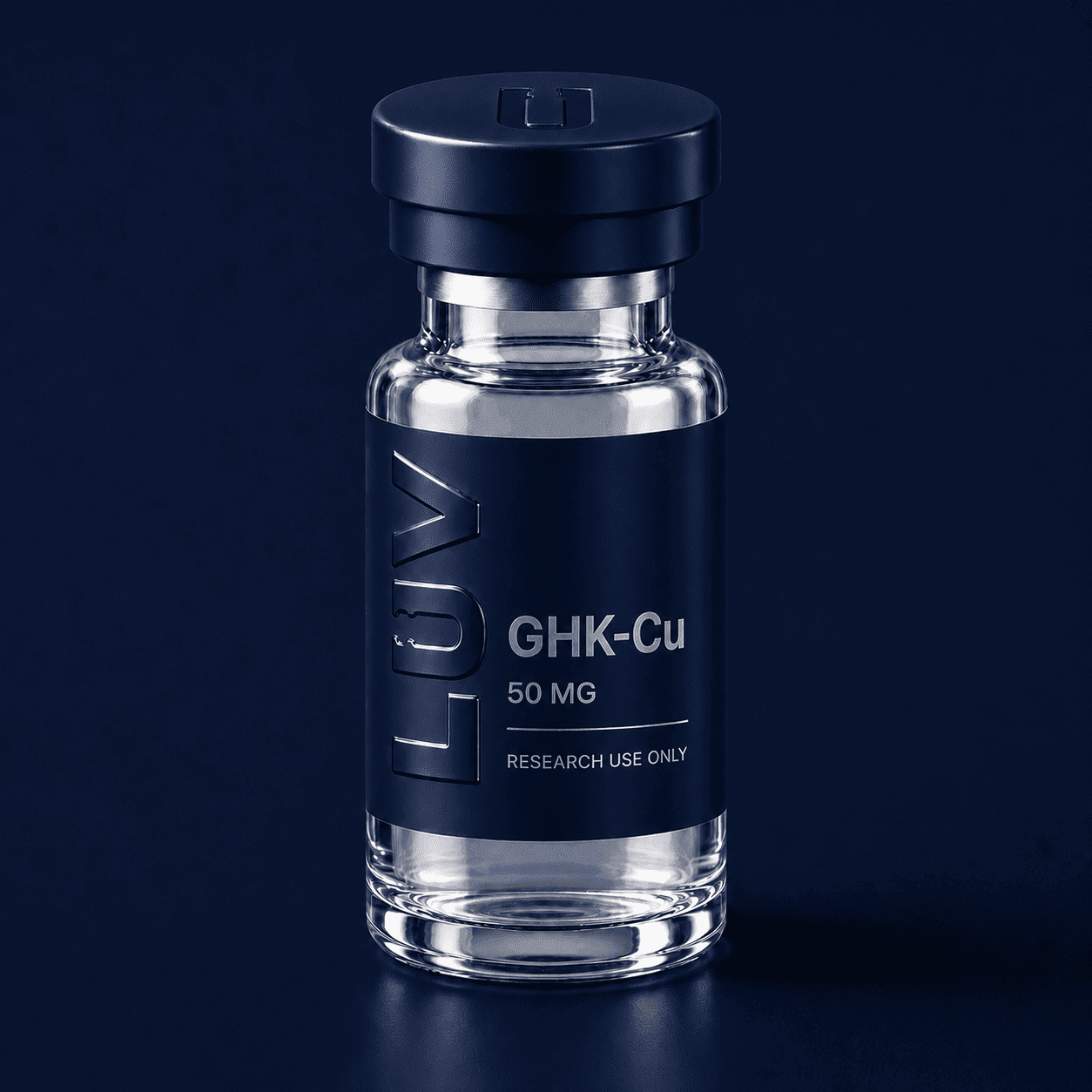
GHK-Cu — For Research Purposes Only

Dermal Research Compound

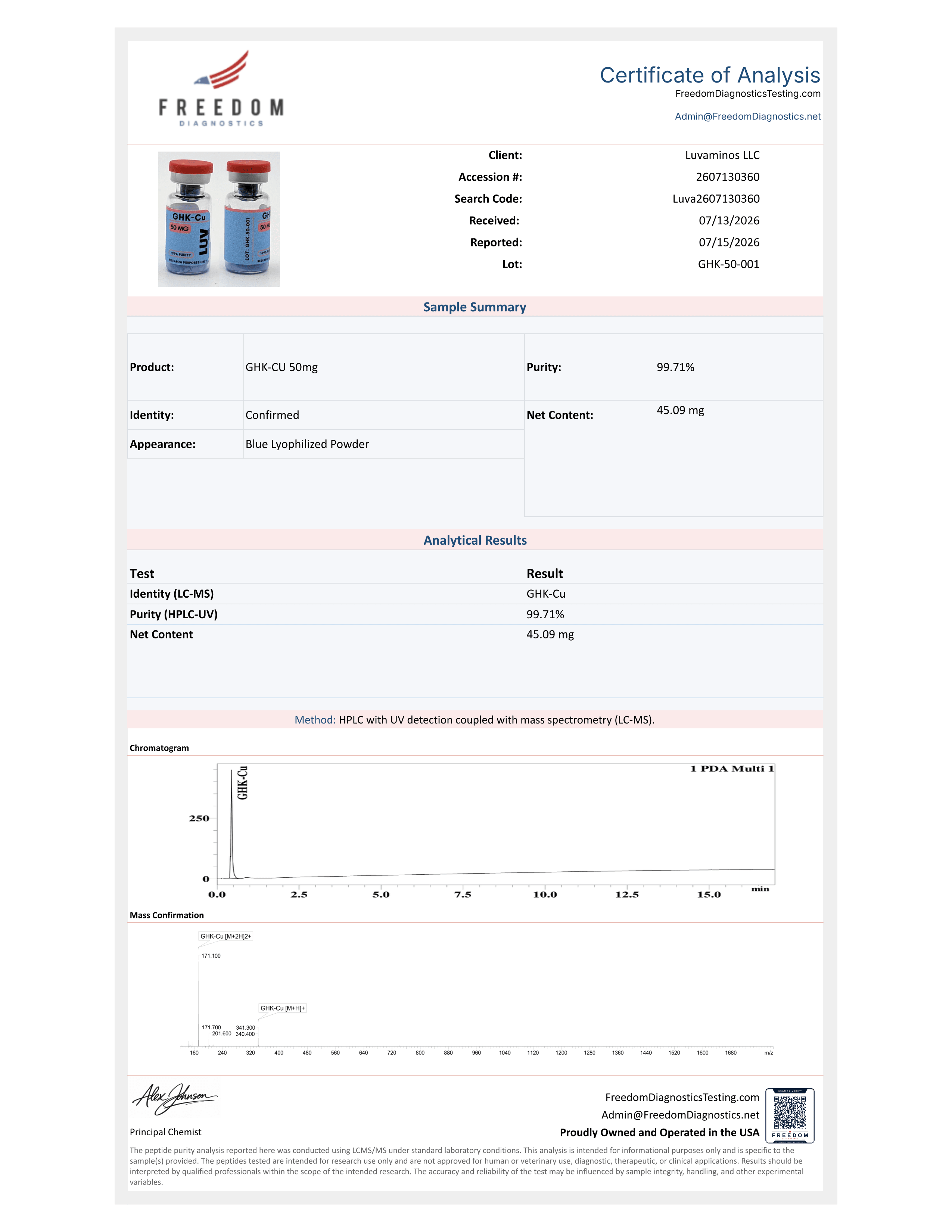
GHK-Cu

For Research Purposes OnlyNot for Human Consumption
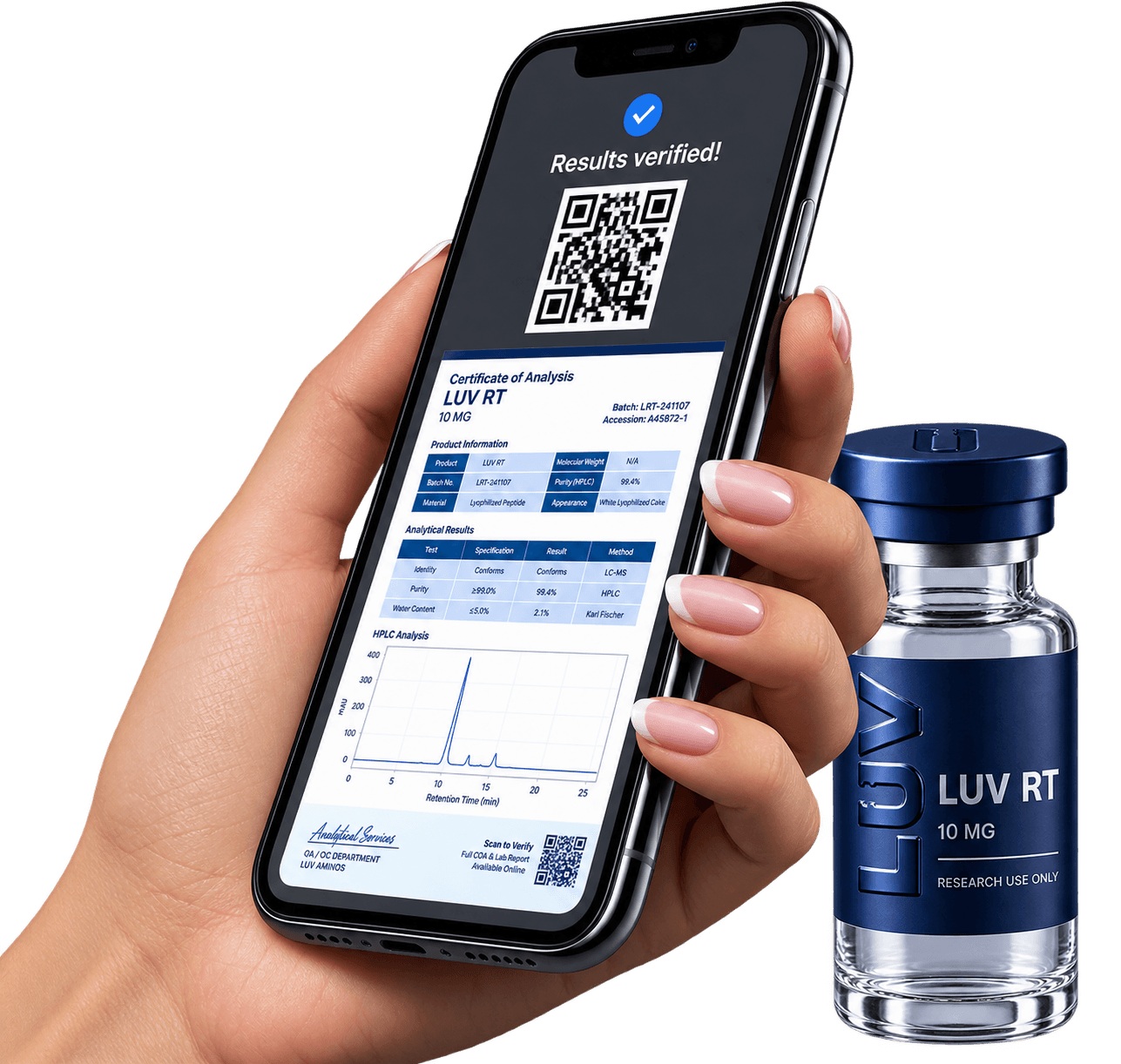
Third-Party TestedCOA AvailablePurity Standards

Total$29.99

Size

Quantity

1

Bundle & Save

View Studies

What It’s Studied For

GHK-Cu is studied mainly in skin and tissue research. It is a small peptide that naturally carries copper — a mineral cells rely on — and researchers look at how it influences the skin's support structure (collagen and the surrounding matrix), wound repair, and the activity of fibroblasts, the cells that rebuild tissue.

Molecular Profile

Type

Tripeptide copper(II) complex

Molecular formula

C14H24CuN6O4

Molecular weight

~403.9 g/mol (free GHK ligand 340.4 g/mol)

CAS number

89030-95-5

Amino acids

3

Sequence

Gly-His-Lys + Cu(II)

Modification

Copper(II) complex of Gly-His-Lys; Cu coordinated by the N-terminal amine, backbone amide nitrogen and histidine imidazole.

Mechanism & Target Class

The copper(II) coordination complex of the tripeptide glycyl-L-histidyl-L-lysine, functioning structurally as a high-affinity copper carrier. Research characterizes its interactions with extracellular-matrix and copper-dependent pathways.

Research Focus

Studied in dermal matrix biology, fibroblast/collagen-synthesis research and wound-repair models.

Storage & Handling

Lyophilized

-20°C, sealed and protected from light/moisture

stable months to years.

Reconstituted

2-8°C short term

-20°C for longer aliquoted storage.

A blue/violet color indicates intact copper coordination; avoid freeze-thaw; aqueous stability is pH-dependent.

References

Reviews

  1. 1

    Mortazavi SM, et al. (2024). BioImpacts — Topical GHK formulation and permeability review

    DOI: 10.34172/bi.30071PubMed 39963574
  2. 2

    Pickart L, Margolina A. (2018). Int J Mol Sci — Gene-data synthesis review

    DOI: 10.3390/ijms19071987PubMed 29986520
  3. 3

    Pickart L, et al. (2015). BioMed Research International — Skin-regeneration pathways review

    DOI: 10.1155/2015/648108PubMed 26236730
  4. 4

    Pickart L, et al. (2012). Oxid Med Cell Longev — Antioxidant and oxidative-stress review

    DOI: 10.1155/2012/324832PubMed 22666519
  5. 5

    Gorouhi F, Maibach HI. (2009). Int J Cosmet Sci — Topical-peptide review (independent)

    DOI: 10.1111/j.1468-2494.2009.00490.xPubMed 19570099
  6. 6

    Maquart FX, et al. (2005). Biochimie — Matrikine and ECM-regulation review (independent)

    DOI: 10.1016/j.biochi.2004.10.006PubMed 15781322

Clinical

  1. 7

    Lee WJ, et al. (2016). Ann Dermatol — RCT of a 5-ALA/GHK combination in a hair study (combination product, not GHK-Cu alone)

    DOI: 10.5021/ad.2016.28.4.438PubMed 27489425
  2. 8

    Mulder GD, et al. (1994). Wound Repair Regen — RCT in a diabetic neuropathic-ulcer study

    DOI: 10.1046/j.1524-475X.1994.20406.xPubMed 17147644

Primary research

  1. 9

    Mao S, et al. (2025). Front Pharmacol — DSS colitis model (animal/in vitro)

    DOI: 10.3389/fphar.2025.1551843PubMed 40672369
  2. 10

    Greco V, et al. (2025). Bioconjug Chem — GHK-hyaluronan copper conjugates, osteogenic/angiogenic assays (in vitro)

    DOI: 10.1021/acs.bioconjchem.4c00545PubMed 40123442
  3. 11

    Bian Y, et al. (2024). Redox Biology — Silicosis model, PRDX6 target (animal/in vitro)

    DOI: 10.1016/j.redox.2024.103237PubMed 38879894
  4. 12

    Zhang Q, et al. (2022). Front Mol Biosci — Cigarette-smoke emphysema model (animal)

    DOI: 10.3389/fmolb.2022.925700PubMed 35936787
  5. 13

    Ma WH, et al. (2020). Life Sciences — Bleomycin pulmonary-fibrosis model (animal/in vitro)

    DOI: 10.1016/j.lfs.2019.117139PubMed 31809714
  6. 14

    Klontzas ME, et al. (2019). Acta Biomaterialia — Alginate-GHK scaffold, MSC osteogenesis (in vitro)

    DOI: 10.1016/j.actbio.2019.02.017PubMed 30772514
  7. 15

    Choi HR, et al. (2012). J Pept Sci — Copper-free GHK, keratinocyte/stem-cell markers (in vitro)

    DOI: 10.1002/psc.2455PubMed 23019153
  8. 16

    Campbell JD, et al. (2012). Genome Medicine — Connectivity-Map gene-signature study in COPD fibroblasts (in vitro/computational)

    DOI: 10.1186/gm367PubMed 22937864
  9. 17

    Hureau C, et al. (2011). Chem Eur J — Cu(II)-GHK coordination and redox-silencing study (structural/spectroscopic)

    DOI: 10.1002/chem.201100751PubMed 21780203
  10. 18

    Gul NY, et al. (2008). Vet Dermatol — Rabbit wound model (animal)

    DOI: 10.1111/j.1365-3164.2007.00647.xPubMed 18177285
  11. 19

    Arul V, et al. (2007). Life Sciences — Diabetic-rat collagen-matrix wound model (animal)

    DOI: 10.1016/j.lfs.2006.09.018PubMed 17049946
  12. 20

    Cangul IT, et al. (2006). Vet Dermatol — Rabbit open-wound model (animal)

    DOI: 10.1111/j.1365-3164.2006.00551.xPubMed 17083573
  13. 21

    Canapp SO, et al. (2003). Vet Surg — Ischemic open-wound model (animal)

    DOI: 10.1111/j.1532-950X.2003.00515.xPubMed 14648529
  14. 22

    Conato C, et al. (2001). Biochim Biophys Acta — Copper-complex chemistry of GHK and analogues (in vitro)

    DOI: 10.1016/s0304-4165(01)00127-1PubMed 11325542
  15. 23

    Siméon A, et al. (2000). J Invest Dermatol — Wound glycosaminoglycan/proteoglycan study (animal)

    DOI: 10.1046/j.1523-1747.2000.00166.xPubMed 11121126
  16. 24

    Siméon A, et al. (2000). Life Sciences — Fibroblast MMP-2 study (in vitro)

    DOI: 10.1016/s0024-3205(00)00803-1PubMed 11045606
  17. 25

    Maquart FX, et al. (1993). J Clin Invest — Rat wound-chamber connective-tissue study (animal)

    DOI: 10.1172/JCI116842
  18. 26

    Wegrowski Y, et al. (1992). Life Sciences — Fibroblast sulfated-GAG-synthesis study (in vitro)

    DOI: 10.1016/0024-3205(92)90504-iPubMed 1522753
  19. 27

    Maquart FX, et al. (1988). FEBS Letters — Fibroblast collagen-synthesis study (in vitro)

    DOI: 10.1016/0014-5793(88)80509-xPubMed 3169264
  20. 28

    Lau SJ, Sarkar B. (1981). Biochem J — Copper(II)-GHK binding and stability-constant study (in vitro)

    DOI: 10.1042/bj1990649PubMed 7340824
  21. 29

    Pickart L, et al. (1980). Nature — Copper-uptake study in hepatoma cells (in vitro)

    DOI: 10.1038/288715a0PubMed 7453802
  22. 30

    Schlesinger DH, et al. (1977). Experientia — Sequence identification as glycyl-histidyl-lysine (biochemical)

    DOI: 10.1007/BF02002806PubMed 858356
  23. 31

    Pickart L, Thaler MM. (1973). Nature New Biology — Foundational serum-tripeptide description (in vitro)

    PubMed 4349963

Primary Database

PubChem CID 378611↗

Also known as: Copper tripeptide-1, Cu-GHK

Research Use Only

These products are intended for research purposes only and are not for human consumption. Not FDA approved. Not intended to diagnose, treat, cure, or prevent any disease.

View this compound in the Research Library →
Research Use Only. All products sold by Luvaminos are intended solely for in vitro research and laboratory use by qualified professionals. They are not approved by the FDA and are not intended for human or animal consumption, therapeutic use, or diagnostic purposes. By purchasing, you confirm you are a licensed researcher or institution and accept full responsibility for compliance with all applicable laws and regulations.