
Cellular
A synthetic D-retro-inverso peptide studied as a tool to disrupt the FOXO4–p53 protein–protein interaction in cellular-senescence research.
FOXO4-DRI is a synthetic 45-residue peptide built from the segment of the FOXO4 transcription factor that contacts the tumor-suppressor protein p53. It is engineered as a D-retro-inverso (DRI) isoform — every residue is a mirror-image D-amino acid and the sequence is reversed — a design used to raise resistance to enzymatic breakdown while preserving side-chain topology. The peptide was introduced as a research tool in the senolytics literature (Baar et al., Cell, 2017) for studying the FOXO4–p53 interaction and cellular senescence. Its primary literature spans structural and biophysical characterization of the FOXO4–p53 interface, in-vitro apoptosis assays in senescent versus non-senescent cell cultures, and preclinical model systems. The body of work is laboratory and animal research.
Last reviewed · For research use only.
Type
Synthetic D-retro-inverso peptide (45 residues)
Molecular formula
C228H388N86O64
Molecular weight
5358.05 g/mol
CAS number
2460055-10-9
Amino acids
45
Sequence
LTLRKEPASEIAQSILEAYSQNGWANRRSGGKRPPPRRRQRRKKRG (D-retro-inverso isoform)
Modification
All-D-amino-acid retro-inverso isoform (reversed sequence of the FOXO4 p53-interacting segment); free N- and C-termini.
FOXO4-DRI corresponds to the reversed, all-D-amino-acid version of the FOXO4 segment that engages the tumor-suppressor protein p53; it carries an arginine-rich cell-penetrating segment at its C-terminus. The research literature characterizes it as a competitive disruptor of the FOXO4–p53 protein–protein interaction. In the originating model (Baar et al., 2017), FOXO4 is described as sequestering p53 in nuclear PML bodies in senescent cells; the peptide is studied for its capacity to interfere with that interaction, and assays measure p53 nuclear localization and apoptosis endpoints in senescent versus non-senescent cell cultures. Subsequent solution-NMR and biophysical work has mapped the binding interface to the disordered p53 transactivation domain and the FOXO4 forkhead domain (Bourgeois et al., 2025; Kohoutova et al., 2025).
Research Focus
Studied as a tool peptide for disrupting the FOXO4–p53 interaction in cellular-senescence research.
FOXO4-DRI is a synthetic 45-residue peptide (sequence LTLRKEPASEIAQSILEAYSQNGWANRRSGGKRPPPRRRQRRKKRG) corresponding to the reversed, all-D-amino-acid (D-retro-inverso) version of the FOXO4 segment that contacts the tumor-suppressor protein p53, fused to an arginine-rich cell-penetrating segment. It does not occur naturally; it is laboratory-synthesized. The peptide was introduced by Baar et al. (Cell, 2017) from work at Erasmus University Medical Center as a tool to disrupt the FOXO4–p53 interaction in cellular-senescence research. The D-retro-inverso design — reversing the sequence and substituting every residue with its mirror-image D-enantiomer — is a peptide-engineering strategy intended to raise resistance to proteolytic breakdown while preserving the spatial arrangement of side chains.
The mechanistic premise comes from the FOXO4–p53 axis. Baar et al. (2017) described FOXO4 as interacting with p53 and influencing its subcellular localization in senescent cells, with the DRI peptide studied as a competitive disruptor of that interaction. A review by Bourgeois and Madl (FEBS Letters, 2018) surveys the FOXO4–p53 axis, framing both as transcription factors that converge on the regulation of cellular senescence and the senescence-associated gene p21. The wider FOXO/p53 transcription-factor biology has been examined in cell-cycle, apoptosis, and DNA-damage-response contexts.
A substantial structural literature has mapped how FOXO4 and p53 engage one another and where the DRI peptide binds. Kim et al. (FEBS Journal, 2022) used NMR spectroscopy to describe dual binding surfaces between the FOXO4 forkhead domain and the p53 transactivation domain, and between FOXO4's C-terminal region and the p53 DNA-binding domain. Mandal et al. (Protein Science, 2022) characterized how FOXO4 contacts the p53 transactivation domain and C-terminal regulatory domain and reported that complex formation can block p53 binding to DNA. Kohoutova et al. (Nature Communications, 2025) used NMR-data-driven simulations to describe the structural plasticity of the FOXO-DBD:p53-TAD interaction and multiple binding modes. Bourgeois et al. (Nature Communications, 2025) solved solution-NMR structural models of the p53 transactivation domain in complex with both the FOXO4 forkhead domain and FOXO4-DRI, reporting that the disordered peptide binds the disordered p53 transactivation domain in a transiently folded complex and that p53 phosphorylation modulates the measured affinity.
FOXO4-DRI is studied within the broader senolytics field, which examines tools that selectively induce apoptosis in senescent cells. Reviews place it in this landscape alongside small-molecule senolytics (Gorgoulis et al., Cell, 2019; Chaib, Tchkonia & Kirkland, Nature Medicine, 2022). Le et al. (eBioMedicine, 2021) used molecular modelling of the FOXO4–p53 interface to design a series of rationally engineered peptides — including one designated ES2 — and examined disruption of FOXO4–p53 nuclear foci and p53-mediated apoptosis endpoints in senescent human cancer-cell cultures and orthotopic mouse models.
Independent groups have examined the peptide across several model systems, measuring senescent-cell viability, apoptosis, and p53 localization endpoints. Huang et al. (Frontiers in Bioengineering and Biotechnology, 2021) examined in-vitro-expanded human chondrocyte cultures, comparing effects on viability between higher- and lower-passage cells. Zhang et al. (Aging, 2020) studied senescent Leydig-cell populations in a naturally aged mouse model, measuring p53 nuclear exclusion and apoptosis endpoints. Han et al. (Journal of Cellular and Molecular Medicine, 2022) examined a bleomycin-induced rodent pulmonary-fibrosis model with attention to fibroblast and extracellular-matrix endpoints. A keloid-fibroblast study (Communications Biology, 2025) measured apoptosis and cell-cycle distribution alongside p53-serine-15 phosphorylation and nuclear-exclusion endpoints. A later endothelial-cell study (Frontiers in Bioengineering and Biotechnology, 2026) examined senescent endothelial cultures with reference to the p53/BCL-2/Caspase-3 pathway.
Background context comes from FOXO transcription-factor biology more broadly. FOXO4 is a forkhead-box transcription factor whose DNA-binding (forkhead) domain and transactivation regions have been characterized by NMR; work on FOXO4–DNA recognition (Communications Biology, 2024) examined how the forkhead domain discriminates target from non-target DNA sequences. This literature establishes the domain architecture that the DRI peptide is designed to mimic and the structural framework within which the FOXO4–p53 interaction is interpreted.
Lyophilized
−20°C desiccated and protected from light
−80°C for long-term storage.
Reconstituted
2–8°C for short-term use
aliquot and store at −20°C to avoid repeated freeze-thaw.
Large arginine-rich peptide; reconstitute in sterile or bacteriostatic water; protect from light and moisture and avoid freeze-thaw cycles.
Reviews
Chaib S, Tchkonia T, Kirkland JL. (2022). Nat Med — Review of cellular senescence and senolytic strategies toward the clinic
Gorgoulis V, et al. (2019). Cell — Consensus review defining cellular senescence and its molecular features
Bourgeois B, Madl T. (2018). FEBS Lett — Review of the FOXO4–p53 axis in cellular senescence
Primary research
Huang H, et al. (2026). Front Bioeng Biotechnol — In-vitro study of senescent endothelial cells and the p53/BCL-2/Caspase-3 pathway
Bourgeois B, et al. (2025). Nat Commun — Solution-NMR structural study of the p53 transactivation domain bound to FOXO4 and to FOXO4-DRI
Kohoutova K, et al. (2025). Nat Commun — NMR and simulation study of the FOXO-DBD:p53-TAD interaction interface
Kong X, et al. (2025). Commun Biol — In-vitro and organ-culture study of senescent keloid fibroblasts measuring p53-pS15 nuclear exclusion and apoptosis
Kang H, et al. (2024). Commun Biol — NMR study of FOXO4 forkhead-domain recognition of target versus non-target DNA
Kim J, et al. (2022). FEBS J — NMR study of the dual binding surfaces between FOXO4 and p53
Mandal R, et al. (2022). Protein Sci — Structural study of FOXO4 contacts with the p53 transactivation and regulatory domains
Han X, et al. (2022). J Cell Mol Med — In-vivo bleomycin-induced rodent pulmonary-fibrosis and fibroblast study
Le HH, et al. (2021). EBioMedicine — Molecular-modelling design of FOXO4–p53-disrupting peptides (incl. ES2) in senescent cancer-cell and orthotopic mouse models
Huang Y, et al. (2021). Front Bioeng Biotechnol — In-vitro study of senescent-cell content in expanded human chondrocyte cultures
Zhang C, et al. (2020). Aging (Albany NY) — In-vivo study of senescent Leydig cells in a naturally aged mouse model
Baar MP, et al. (2017). Cell — Foundational study introducing the FOXO4-DRI peptide and the FOXO4–p53 senolytic concept
Also known as: FOXO4 D-Retro-Inverso, FOXO4-DRI peptide, FOXO4 DRI
Research Use Only
These products are intended for research purposes only and are not for human consumption. Not FDA approved. Not intended to diagnose, treat, cure, or prevent any disease.
| Compound | Type | Molecular weight | CAS number |
|---|---|---|---|
| FOXO4-DRIThis page | Synthetic D-retro-inverso peptide (45 residues) | 5358.05 g/mol | 2460055-10-9 |
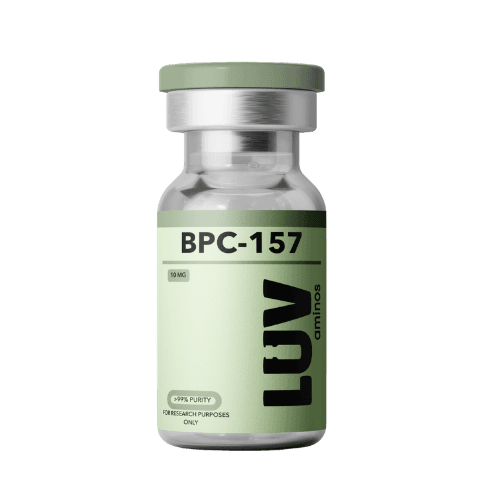
| BPC-157 | Synthetic peptide (pentadecapeptide) | 1,419.5 g/mol | 137525-51-0 |
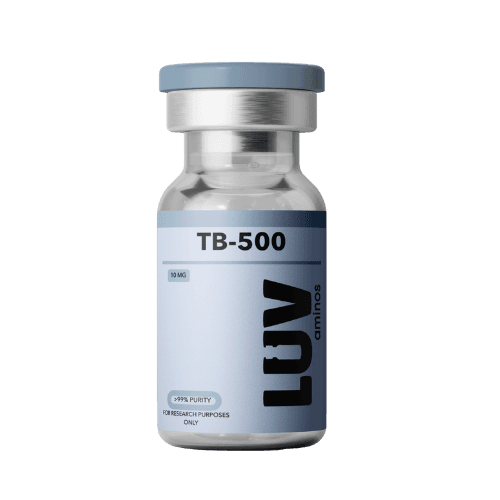
| TB-500 | Synthetic peptide (Thymosin Beta-4 related) | ~4,963 g/mol | 77591-33-4 |
| Epithalon | Synthetic linear tetrapeptide | 390.35 g/mol | 307297-39-8 |
| SS-31 | Synthetic aromatic-cationic tetrapeptide (C-terminally amidated, mitochondria-targeted) | 639.8 g/mol | 736992-21-5 |
Comparison of laboratory reference specifications only. For research use only; not a therapeutic comparison.