
Cellular
The actin-binding fragment of Thymosin Beta-4, studied in preclinical cellular research models.
TB Fragment is the short, actin-binding fragment of Thymosin Beta-4 (Tβ4) — the N-terminally acetylated heptapeptide Ac-LKKTETQ, corresponding to residues 17-23 (the central LKKTET / LKKTETQ actin-binding motif). It is the short active fragment, NOT the full-length 43-residue peptide. In preclinical (cell and animal) models, researchers study this motif in actin-sequestration biochemistry, cell-migration assays, and new-blood-vessel-formation (angiogenesis) research models. The two molecules — the short fragment and full-length Tβ4 — are studied as separate species, and most published in vivo and clinical work has examined the full-length peptide.
Last reviewed · For research use only.
Type
Synthetic peptide (Thymosin Beta-4 actin-binding fragment)
Molecular formula
C38H68N10O14
Molecular weight
~889.0 g/mol
CAS number
885340-08-9
Amino acids
7
Sequence
Ac-LKKTETQ
Modification
N-terminal acetylation (Ac-LKKTETQ). This is the SHORT actin-binding fragment — residues 17-23 of Thymosin Beta-4 — and is a chemically distinct molecule from full-length Tβ4 (43 residues; CAS 77591-33-4). The two are studied as separate species: the fragment is the central actin-binding motif, while the great majority of published in vivo and clinical research has examined the full-length peptide.
The LKKTET(Q) motif is the central actin-binding domain of Thymosin Beta-4, the principal intracellular G-actin-sequestering peptide. Biochemical and structural research characterizes this segment as a primary contact site that engages monomeric (G-)actin and modulates actin polymerization; it acts through actin binding rather than through a defined cell-surface receptor.
Research Focus
The actin-binding fragment (Ac-LKKTETQ) of Thymosin Beta-4, studied in actin-sequestration biochemistry, cell-migration, and angiogenesis research models.
TB Fragment denotes the short, actin-binding fragment of Thymosin Beta-4 (Tβ4): the N-terminally acetylated heptapeptide Ac-LKKTETQ, corresponding to residues 17-23 of the 43-residue parent peptide. The hexapeptide core LKKTET (residues 17-22) is strongly conserved across the β-thymosin family and other actin-binding proteins and is the segment most often described as the central actin-binding motif. This material is the SHORT active fragment and is chemically distinct from full-length Tβ4: the synthetic Ac-LKKTETQ heptapeptide carries the molecular formula C38H68N10O14 (CAS 885340-08-9; PubChem CID 62707662), whereas full-length Tβ4 is a 43-residue acetylated peptide of roughly 5 kDa (CAS 77591-33-4). Analytical work synthesized and characterized this heptapeptide directly by HPLC and high-resolution mass spectrometry (Esposito et al., 2012) and by LC-MS (Ho et al., 2012), confirming the identity of the marketed fragment as Ac-LKKTETQ. Because the literature regards the fragment and the full-length peptide as separate species, the sections below attribute each report to the molecule actually examined.
The molecular role most directly tied to the fragment is the binding and sequestration of monomeric G-actin. Foundational biochemistry established full-length Tβ4 as the major intracellular actin-sequestering peptide forming a 1:1 complex with actin monomers (Safer et al., 1991; Weber et al., 1992). Fragment-focused work then examined the isolated motif: Hannappel & Wartenberg (1993) compared the actin-sequestering ability of Tβ4, of Tβ4 fragments, and of Tβ4-like peptides using the DNase I inhibition assay, providing a direct read on the motif's contribution to actin binding. This biochemistry frames the LKKTET(Q) sequence as the central actin-contact region examined for the fragment.
Structural and mutational studies have mapped how the 17-23 segment engages actin. Mutational analysis of full-length variants resolved the N-terminal helix (residues 1-16) and the hexapeptide motif (residues 17-22) as separate structural entities, with charged and hydrophobic residues participating in the actin interaction (Van Troys et al., 1996). NMR work in solution examined the conformational requirements of Tβ4 mutants and correlated them with actin binding (Simenel et al., 2000). Crystallographic and NMR studies of the β-thymosin / WH2 module then positioned the central LKKTET segment between actin subdomains: Irobi et al. (2004), working with a gelsolin-Tβ4 hybrid, and Hertzog et al. (2004) described the actin-assembly switch, Didry et al. (2012) used X-ray, SAXS, and NMR to examine how individual residues distinguish sequestering from assembly-promoting behavior, and Xue et al. (2014) resolved Tβ4:actin complexes relevant to the profilin-exchange step. Together these reports characterize the structural context of the actin-binding motif carried by the fragment.
A distinct strand of research has examined the actin-binding region in angiogenesis and cell-migration model systems rather than the whole peptide. Philp et al. (2003) examined the actin-binding site of Tβ4 in angiogenesis assays, associating the short actin-binding motif with angiogenic endpoints. Dettin et al. (2011) designed synthetic peptides corresponding to the N-terminus, the central part, and the C-terminus of Tβ4 and examined their behavior in in vitro and in vivo angiogenesis model systems. Wyczółkowska et al. (2007) examined Tβ4 and Tβ4-derived peptides — including the 17-23 fragment — in mast-cell exocytosis assays, noting the LKKTET motif as the implicated segment. These reports characterize cell-migration and angiogenesis pathways in model systems rather than human outcomes.
Review literature on the β-thymosin family situates the fragment within the broader actin-regulation field. Reviews describe Tβ4 as the principal G-actin-sequestering peptide and survey the β-thymosin / WH2 module, the conservation of the LKKTET motif, and the intracellular and extracellular activities of the family (Mannherz & Hannappel, 2009; Hannappel, 2007; Goldstein et al., 2005; Goldstein et al., 2012). These syntheses make clear that the bulk of in vivo and clinical investigation has used the full-length peptide, while the short fragment is studied chiefly in actin biochemistry, structural biology, and cell-based angiogenesis and migration assays. Observations on the full-length peptide are not assumed to transfer to the fragment, and the two are catalogued under separate molecular identifiers.
Lyophilized
-20°C
~24 months desiccated and protected from light.
Reconstituted
2-8°C
typically stable days to a few weeks; avoid freeze-thaw.
Highly water-soluble; protect from light; aliquot to avoid freeze-thaw; salt form affects exact mass.
Reviews
Mannherz HG, Hannappel E. (2009). Cell Motil Cytoskeleton — Review of the β-thymosin actin-binding protein family and the LKKTET motif
Goldstein AL, et al. (2012). Expert Opin Biol Ther — Review of full-length Tβ4 biology and research applications
Hannappel E. (2007). Ann NY Acad Sci — Review of β-thymosin structure, function, and evolution
Reviews
Goldstein AL, et al. (2005). Trends Mol Med — Actin-sequestering and 'moonlighting' review (full-length Tβ4)
Primary research
Xue B, et al. (2014). Proc Natl Acad Sci USA — X-ray structures of Tβ4:actin complexes and the profilin-exchange step
Esposito S, et al. (2012). Drug Test Anal — Synthesis and HPLC/HRMS characterization of the N-acetylated 17-23 fragment (Ac-LKKTETQ)
Ho ENM, et al. (2012). J Chromatogr A — LC-MS analytical characterization of the Ac-LKKTETQ heptapeptide and metabolites
Didry D, et al. (2012). EMBO J — β-thymosin / WH2 structural study of actin assembly (X-ray, SAXS, NMR)
Dettin M, et al. (2011). Cell Immunol — Angiogenesis assays of synthetic Tβ4-derived peptides (N-terminal, central, C-terminal)
Wyczółkowska J, et al. (2007). Peptides — Mast-cell exocytosis assays of Tβ4 and Tβ4-derived peptides, including the 17-23 fragment
Irobi E, et al. (2004). EMBO J — Actin-sequestration crystal-structure study (β-thymosin / WH2 module)
Hertzog M, et al. (2004). Cell — β-thymosin / WH2 structural study of the actin-assembly switch
Philp D, et al. (2003). FASEB J — Angiogenesis assays associating the Tβ4 actin-binding site with angiogenic endpoints
Simenel C, et al. (2000). Eur J Biochem — NMR analysis of Tβ4 mutants correlating conformation with actin contact
Van Troys M, et al. (1996). EMBO J — Mutational mapping of the Tβ4 actin-binding site (N-terminal helix and 17-22 motif)
Hannappel E, Wartenberg F. (1993). Biol Chem Hoppe-Seyler — Actin-sequestering ability of Tβ4 fragments and Tβ4-like peptides (DNase I inhibition assay)
Weber A, et al. (1992). Biochemistry — 1:1 actin-monomer-sequestration study (full-length Tβ4)
Safer D, Elzinga M, Nachmias VT. (1991). J Biol Chem — Identification of Tβ4 as the actin-sequestering peptide Fx (full-length Tβ4)
Also known as: Thymosin β4 actin-binding fragment, Ac-LKKTETQ, LKKTETQ, Tβ4(17-23), Thymosin beta-4 fragment 17-23
Research Use Only
These products are intended for research purposes only and are not for human consumption. Not FDA approved. Not intended to diagnose, treat, cure, or prevent any disease.
| Compound | Type | Molecular weight | CAS number |
|---|---|---|---|
| TB FragmentThis page | Synthetic peptide (Thymosin Beta-4 actin-binding fragment) | ~889.0 g/mol | 885340-08-9 |
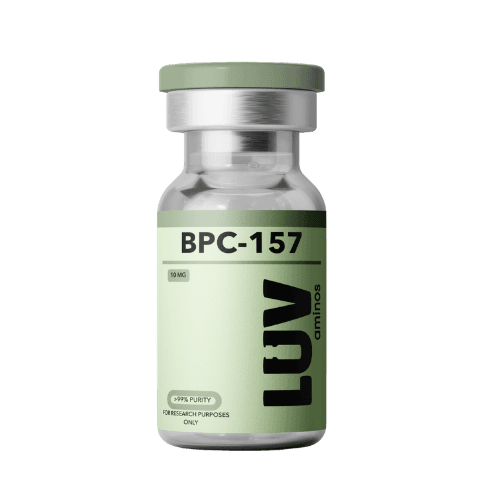
| BPC-157 | Synthetic peptide (pentadecapeptide) | 1,419.5 g/mol | 137525-51-0 |
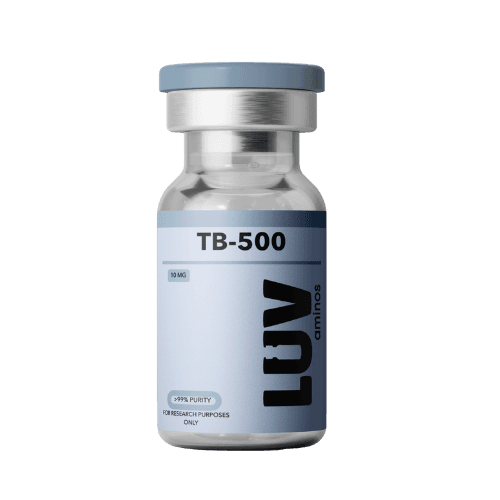
| TB-500 | Synthetic peptide (Thymosin Beta-4 related) | ~4,963 g/mol | 77591-33-4 |
| Epithalon | Synthetic linear tetrapeptide | 390.35 g/mol | 307297-39-8 |
| SS-31 | Synthetic aromatic-cationic tetrapeptide (C-terminally amidated, mitochondria-targeted) | 639.8 g/mol | 736992-21-5 |
Comparison of laboratory reference specifications only. For research use only; not a therapeutic comparison.